Taking on new projects

Your business shouldn't run on copy and paste.

I build the software your business runs on, and I answer for it: the tools, automation and AI that take the repetitive work off your team.

Anton de Villiers, smiling, in a white shirt
Anton de VilliersThe person you speak to is the person who builds it.Read my story

26 yearsin IT, running my own business since 2002

175+client reviews, almost all five stars

Since 2011in software development

5 regionsclients in South Africa, the UK, Europe, the US and Australia

Which of these sounds like your business?

Pick the closest one. You'll see what's usually going on, what I'd do first, and something real I've built for it.

Your systems don't talk to each other, so your people do it for them.

What's usually going on
Orders, bookings or customer details live in separate tools. Someone copies between them every day, and mistakes creep in.
What I'd do first
Connect the two systems that cost you the most time, so information moves once, on its own, and gets checked on the way.
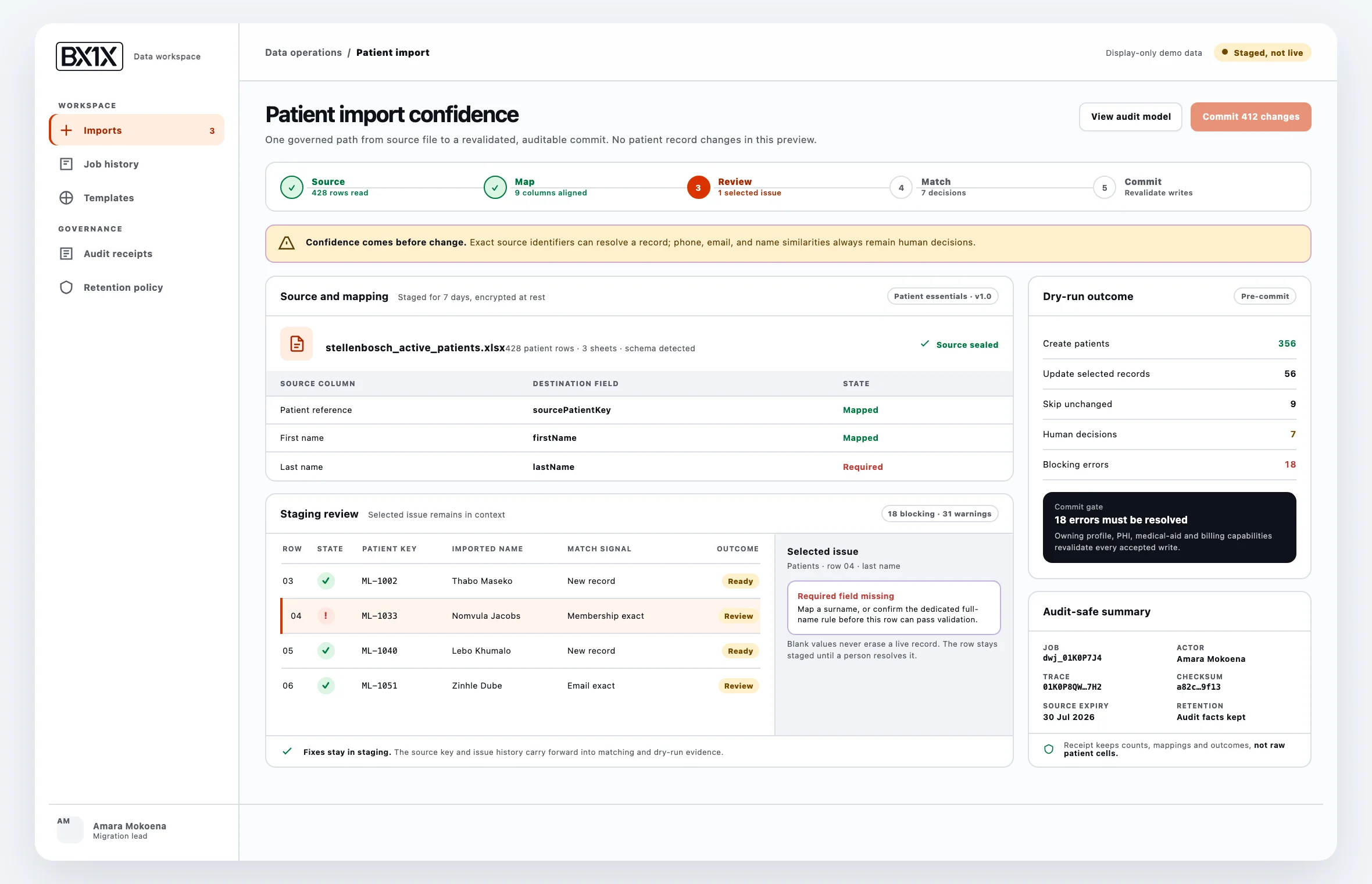
A data import screen that checks each record before it enters the system
An import that checks every record before it lands, and shows exactly what needs attention. Demo data.
For your technical person

This is a Connect engagement: custom APIs, webhooks and sync services with validation, retries and reconciliation so records can be proven to agree. Delivered on Node.js, with PostgreSQL where state is needed.

Built before: ICA course selector, Optivest price calculator, rewards and subscription APIs.
API & integrations service

The spreadsheet works. Until two people open it at once.

What's usually going on
One file holds your bookings, stock or job list. Only one person really understands it, and nobody can see the full picture on their phone.
What I'd do first
Turn that one spreadsheet into a simple screen your whole team can use at once, with the rules you already follow built in.
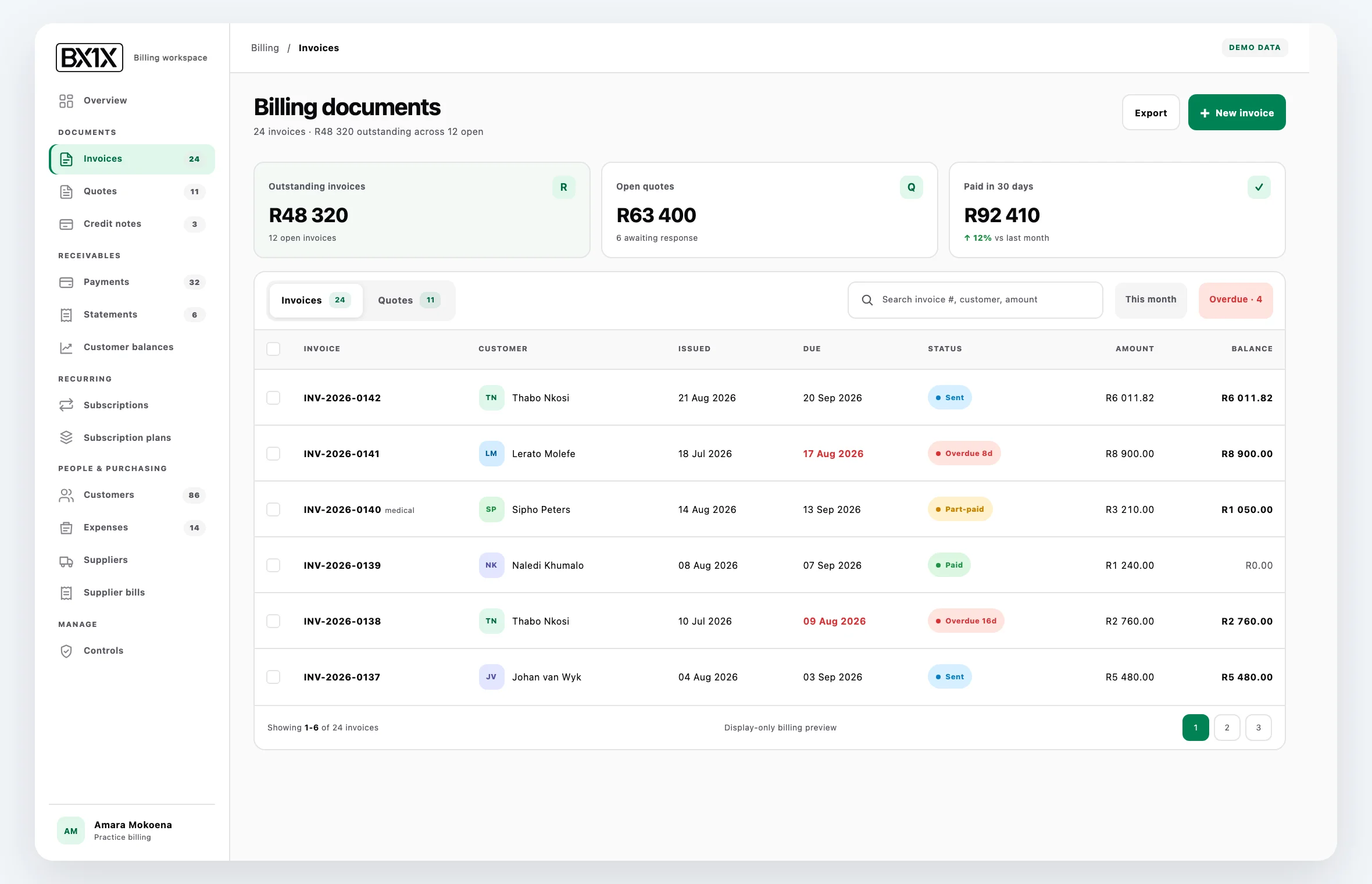
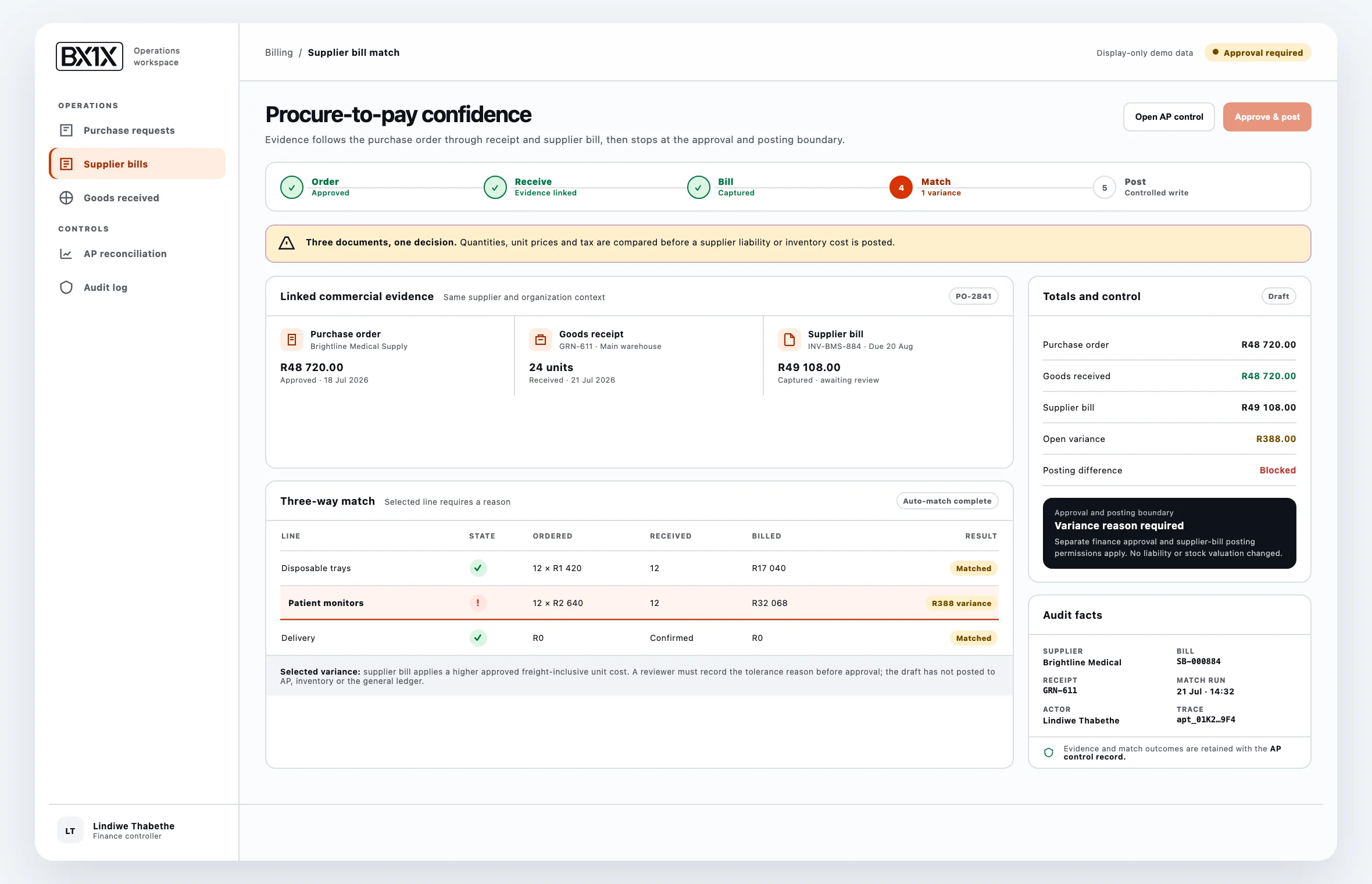
BX1X purchasing workspace showing purchase orders, supplier invoices and approval checks with demo data
BX1X purchasing: requests, approvals and payments in one shared workflow. Demo data.
For your technical person

This is a Build engagement: one focused web application with its own records, permissions and audit trail. The first slice is a single named user outcome with a clear acceptance test.

Focused business tools · Cloud applications

Money shouldn't wait on someone finding time to send a PDF.

What's usually going on
Quotes are rebuilt by hand, invoices go out late, and chasing payment is a job nobody wants.
What I'd do first
Make quoting and invoicing one click from the work itself, then send a payment link the customer can use from their phone.
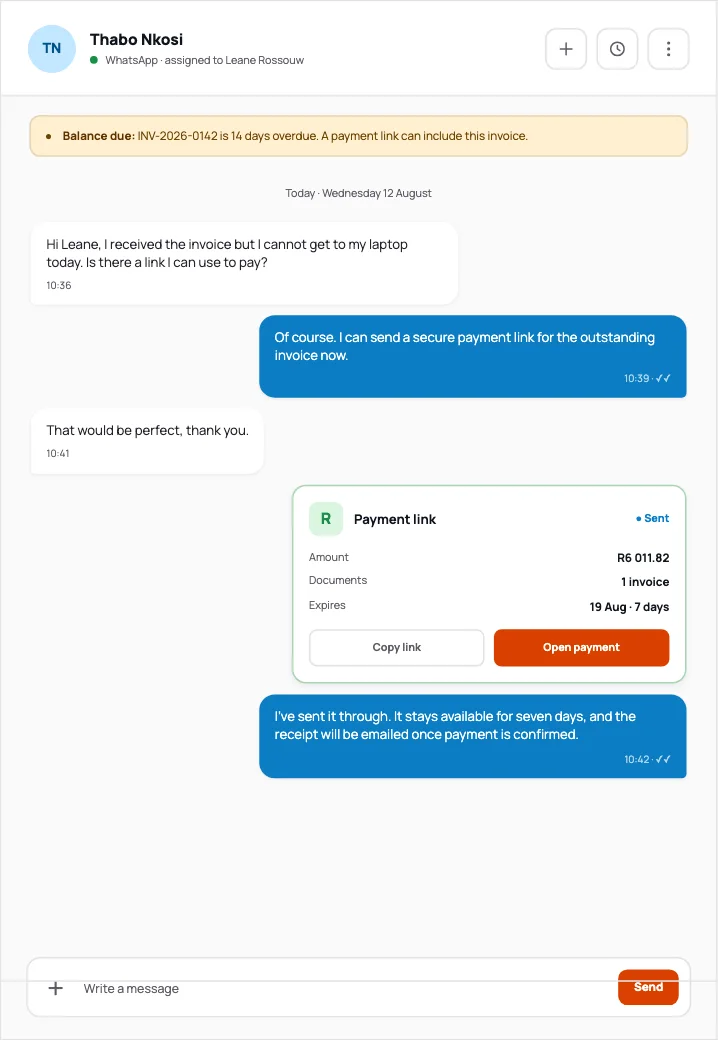
A WhatsApp conversation where an overdue invoice is paid through a secure payment link
An overdue invoice turned into a payment link, inside the chat the customer already uses.
For your technical person

Built on BX1X, my own business platform: billing documents, payment links, accounting ledgers and bank reconciliation, with messaging channels wired to the same customer record.

Explore BX1X

You don't need a new website. You need the missing piece.

What's usually going on
Your WordPress, WooCommerce or Shopify site mostly works, but one thing customers or staff need just isn't possible.
What I'd do first
Build that one feature properly into the platform you already have. No rebuild, no starting over.
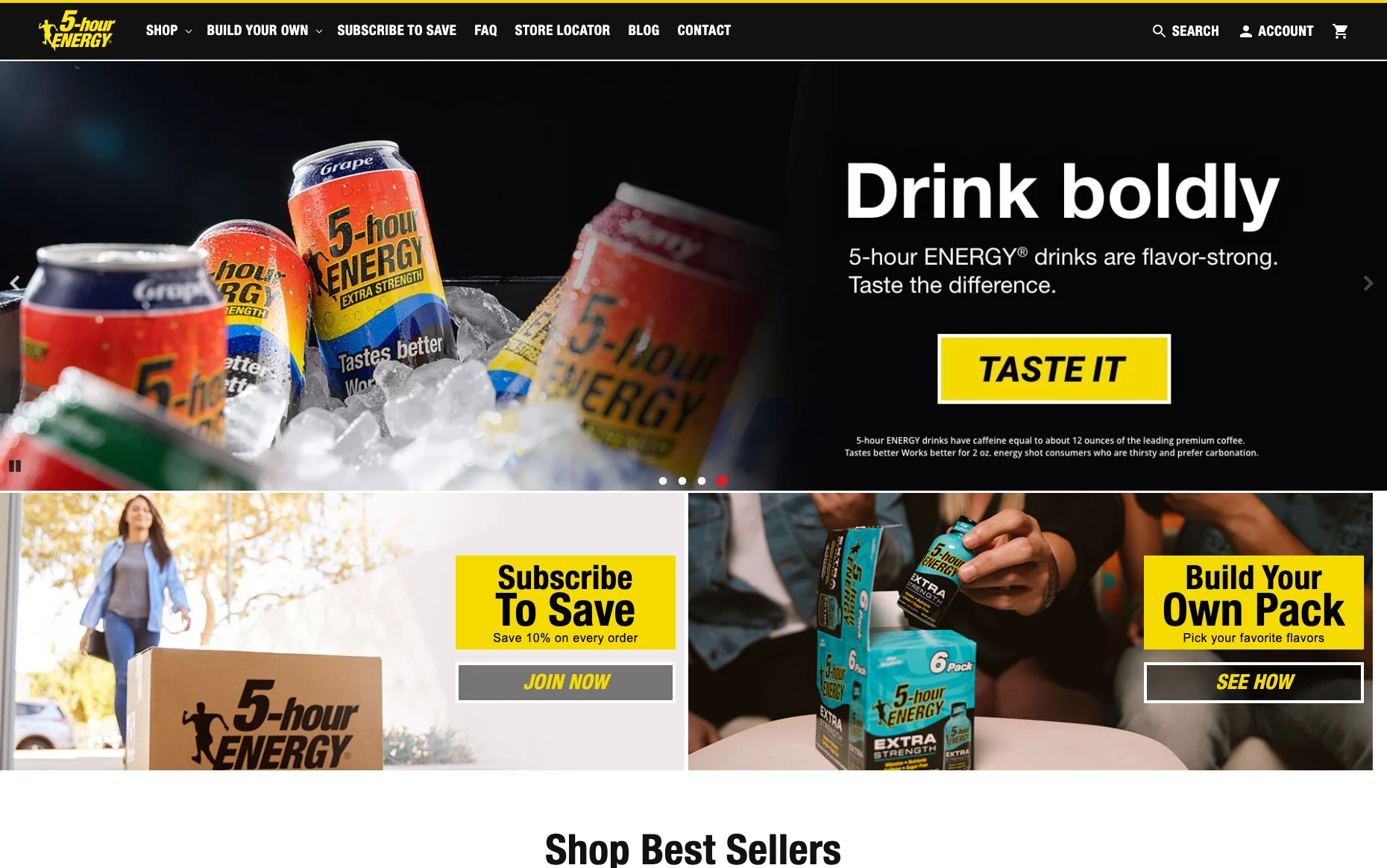
The 5-hour Energy online store
A live distributor search added to 5-hour Energy’s existing site, fed from their form tool. No rebuild.
For your technical person

This is an Extend engagement: custom plugins, embedded apps, checkout rules or platform integrations, tested in staging. Codeable Certified Expert since November 2014.

Custom platform apps · WordPress & WooCommerce · Shopify

Start with one job AI can do well, and keep a person in charge of it.

What's usually going on
Everyone says you should use AI. Nobody says which part of your business, what it will cost, or what happens to your data.
What I'd do first
Find one repetitive task, like reading invoices or drafting replies, and automate it with checks your team can see and approve.
A customer record workspace with connected history and actions
One connected record, so an assistant, human or AI, works from the facts.
For your technical person

Custom AI pipelines applied through consultation: retrieval over your own records, structured extraction, and human approval steps. Model choice, cost and data residency are decided with you before anything is built.

AI app development · AI apps

Before anyone writes more code, get an honest answer about what you have.

What's usually going on
The demo looked great. Now it's slow, insecure or nobody can change it, and the person who built it has gone quiet.
What I'd do first
Review the code, data and hosting, then tell you in writing: keep it, fix it, rebuild part of it, or stop spending.
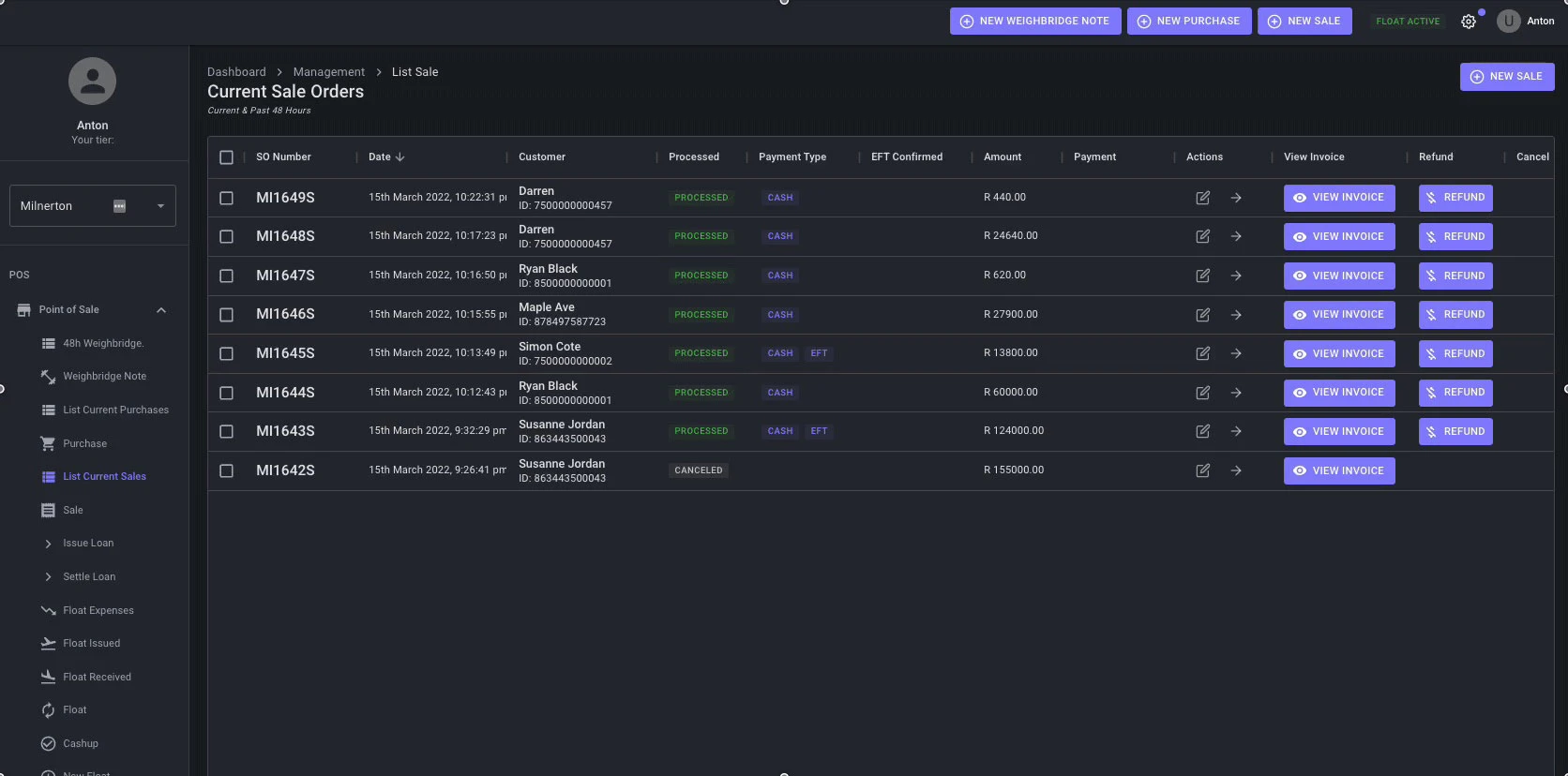
A point-of-sale screen listing current sale orders, payment types and refunds
A point-of-sale system built to run seven branches, 350 employees and 5,000 transactions a day.
For your technical person

This is a Rescue engagement: access, repository, deployment, data and dependency review, ending in a written readiness decision. Includes AI-generated (vibe-coded) codebases.

Rescue a failed project · Fixing vibe-coded apps

Start with the smallest version that proves the idea.

What's usually going on
You know what the product should do. You don't know what the first version should cost, who to trust with it, or whether you'll own what gets built.
What I'd do first
Agree the smallest version that proves the idea, then build that at a fixed price, in your own accounts from day one.
BX1X billing documents list: quotes, invoices and credit notes with their status
BX1X, my own product. I've been the founder with the idea too.
For your technical person

This is a Build engagement: the first version as a fixed-price first piece, then phases, each quoted before it starts. Hosting and accounts sit in the founder's name, and who owns the code is agreed in writing before work starts.

My own products: Authentikor, a multi-tenant verification platform, and BX1X, 1,900+ endpoints on one platform.

How a project with me works · Custom software

None of these quite fit? Answer seven short questions or just call me and describe it in your own words.

Where should I start?

Not sure what you need? Answer seven short questions about your business, not about software. You get a plain starting point.

Already know the problem? Tell me the problem Or Call +27 87 150 9305.

Start with the first question. The other six follow on the next page.

Question 1 of 7: What’s missing right now?

Pick the one closest to your problem. You can change it later.

For your technical person

What is missing today? Choose the answer closest to the problem. You can change it later.

  • A new workflow or tool. The work is manual, scattered, or not supported by a suitable system.
  • A reliable system connection. Two or more systems need to exchange the right information.
  • A capability in an existing platform. WordPress, WooCommerce, or Shopify is missing a specific behaviour.
  • Confidence in software already started. The current code is inherited, stalled, fragile, or AI-built and needs an evidence-led decision.
Question 2 of 7: Where does the work actually break down?

Think about where things get delayed, done twice, or lost.

For your technical person

Where does the work break down? Think about the handoff that causes the most delay, rework, or uncertainty.

  • Inside a manual process. People repeat steps, chase updates, or maintain spreadsheet and email workarounds.
  • Between existing systems. Records disagree, exports are manual, or updates arrive late.
  • Inside a store or website flow. The platform works, but its customer, admin, or checkout journey does not fit.
  • Inside software nobody can safely continue. The demo works, but launch, changes, ownership, deployment, or support have become risky.
Question 3 of 7: Where do you want to see the first improvement?

Where would you notice it first?

For your technical person

Where should the first useful result live? Choose the place where the improvement needs to be visible first.

  • In a focused web application. A team needs one shared screen, dashboard, portal, or workflow.
  • Across two or more systems. The improvement is a business process that spans existing software.
  • Inside the existing platform. Customers or administrators should use it within the current site or store.
  • In the current codebase and deployment. The first result is control of what exists and a responsible path forward.
Question 4 of 7: Which system should stay in charge of the real records?

When two places disagree, which one do you believe?

For your technical person

What should remain the source of truth? This is the system that should own the important records and rules.

  • The new focused application. The tool needs its own records, rules, permissions, and shared state.
  • An existing business system. A CRM, ERP, payment service, or external API already owns the data.
  • WordPress, WooCommerce, or Shopify. The current platform should remain at the centre of the workflow.
  • That is not clear yet. Ownership, data boundaries and operational dependencies must be established before more work.
Question 5 of 7: What should the first small result prove?

Pick the smallest result that would already be useful.

For your technical person

What should the first working slice prove? Pick the smallest result that would make the project useful.

  • One complete user outcome. A person can finish one important workflow from start to finish.
  • One dependable data flow. One system pair exchanges validated data that can be reconciled.
  • One working platform behaviour. One missing screen, rule, plugin, or extension works in the real platform.
  • One written readiness decision. The evidence supports a continue, harden, selectively rebuild, replace, or stop decision.
Question 6 of 7: What’s the riskiest part to get right first?

The part that would hurt most if it went wrong.

For your technical person

What needs the most technical attention first? Choose the risk that should be resolved before the project expands.

  • Workflow and scope clarity. The users, decisions, and acceptance boundary need to be made explicit.
  • Data reliability and ownership. The flow needs validation, retries, failure handling, and reconciliation.
  • Platform constraints. Plans, APIs, hooks, permissions, or staging access may shape the solution.
  • Production risk and operational ownership. Access, security boundaries, deployment, rollback, maintainability and support need review.
Question 7 of 7: What do you already have ready to go?

You don’t need everything ready. Pick what’s closest.

For your technical person

Which starting point is closest to ready? You do not need everything prepared to send a project enquiry.

  • The workflow is understood. You can name the users, inputs, decisions, and useful output.
  • The systems are known. You know the systems, data objects, and access needed for the first flow.
  • The platform is known. You know the platform, plan, current setup, and missing behaviour.
  • The software and accounts can be accessed. The repository, deployment, data and third-party services can be inspected legally.
Start again

Your answers stay in this browser unless you choose to send them with a message.

Anyone can make an app with AI now. Someone still has to answer for it.

I use AI every day, in my own work and in what I build for clients. The difference is 26 years of knowing what breaks, and being the person who picks up when it does.

What AI tools are genuinely good at

  • Producing a convincing demo in an afternoon
  • Writing the obvious parts of the code quickly
  • Reading, sorting and summarising text
  • Drafting replies, quotes and descriptions

What your business still needs from a person

  • Understanding your rules, exceptions and customers
  • Keeping your data and your customers' money safe
  • Knowing when the AI's answer is confidently wrong
  • Someone accountable after launch, not just before it

What a developer brings that AI doesn’t

  • SecurityKeeping customer data, logins and payments out of the wrong hands. AI-built apps often ship with passwords in the code and no checks on who can see what.
  • PerformanceStaying fast when fifty people use it at once, not just one person in a demo.
  • ScalingGrowing from a hundred records to a hundred thousand without a rebuild.
  • Sound codeCode the next developer can read, test and change safely, so you’re never locked in to one person.
  • After launchBackups, updates and a plan for when something breaks, with someone who answers the phone.
For your technical person

Security: access rules checked on the server for every request, not just hidden buttons; secrets kept out of the code and the repository, in environment settings that can be rotated; input validated at the edges; dependencies kept patched.

Performance: database indexes and query review, caching where it pays, and slow work moved to background jobs, measured with realistic data rather than a demo set.

Scaling: a data model designed for growth, paginated lists and searches, and services that can run on more than one server.

Sound code: a clear structure, automated tests on the parts that handle money and data, code review, documentation and version control, with the handover agreed in writing.

After launch: backups with a tested restore, error alerts and monitoring, and a regular update schedule.

Reading paperworkPull the details out of invoices, forms and emails.

Answering customersDraft replies from your own records, approved by your team.

Finding thingsAsk a question and search years of documents at once.

Checking workFlag the order, quote or entry that doesn't look right.

The AI I run my own business on.

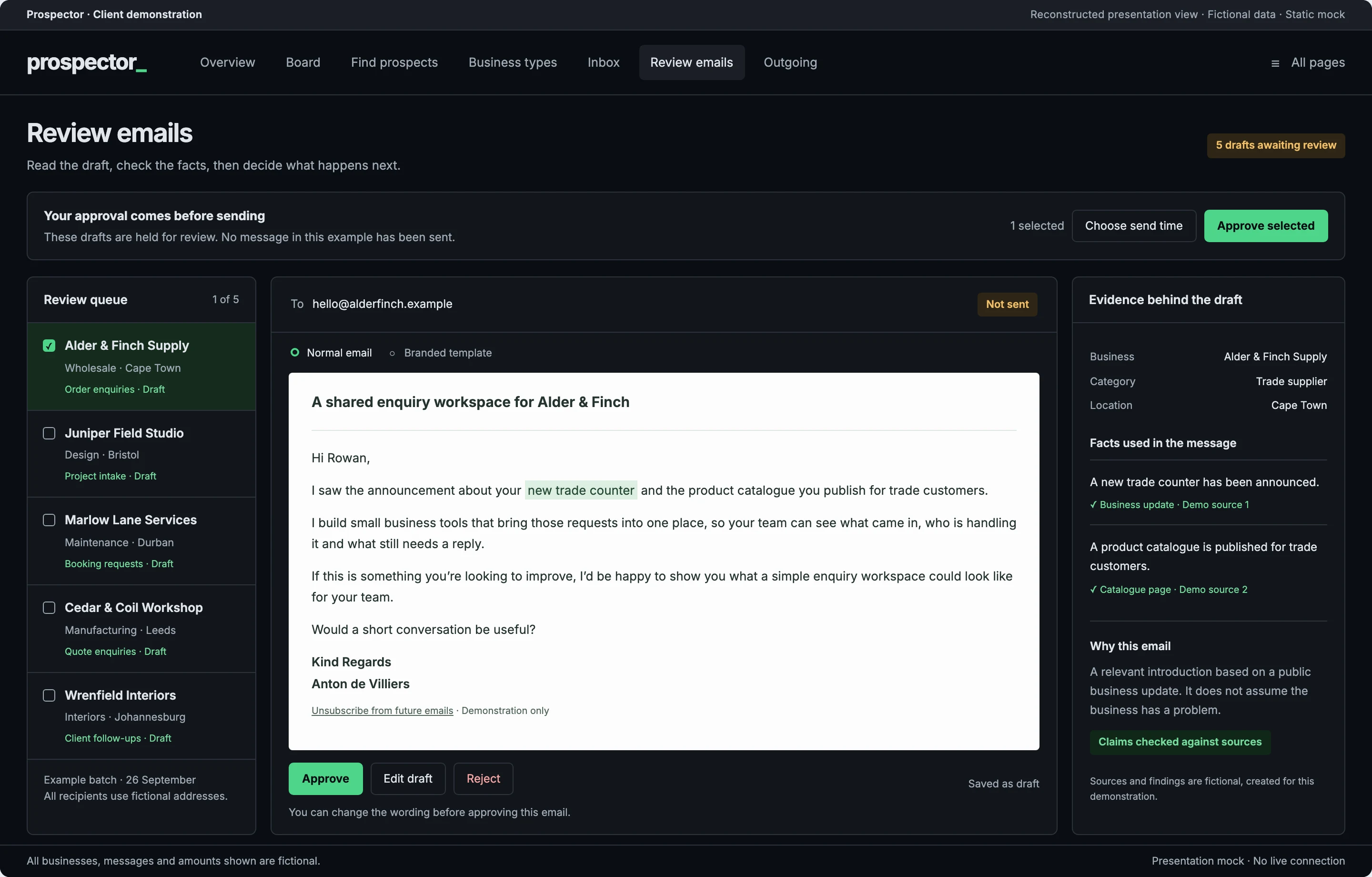
Prospector review queue: an AI-drafted email waiting for a person to approve it
Prospector researches businesses and drafts my outreach. Nothing goes out until I approve it.
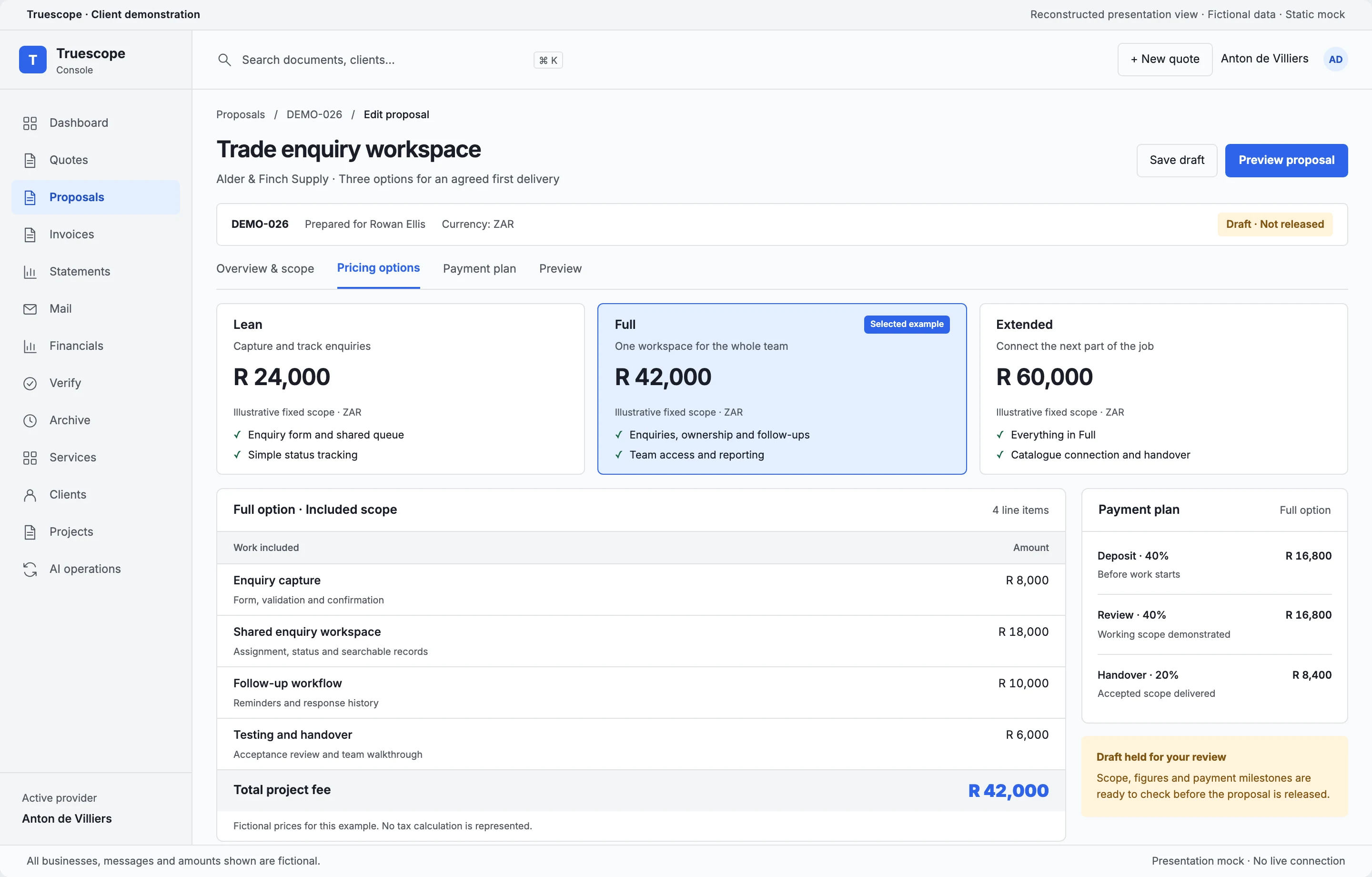
Truescope proposal editor with three pricing options, marked draft, not sent
Truescope drafts and checks my proposals. Nothing reaches a client until I release it.

What clients say when nobody's asking.

★★★★★

“Anton is very knowledgeable and great at explaining technicality in a straightforward way. I recommend a consultation with Anton before you get going.”
Ushi PatelFounder
“In an industry fraught with fly-by-night developers, it has been refreshing to have found someone who is kind, accessible and has his clients' best interests at heart.”
Simon BloomhillCOO, Camelthorn Travel
“Anton was able to help solve a problem which had confounded other WordPress experts.”
Rachel CaseClient

175+ client reviews, almost all five stars. The ones you can read in full are from my Codeable years, 2014 to 2018. Since then my work comes through agencies and referrals, often under NDA, so it’s shown as projects instead. Read the reviews See recent projects

What happens after you get in touch.

  1. You tell me the problem

    A phone call or three sentences. No brief, no jargon. The first conversation is free.

  2. A straight answer, usually the same working day

    Whether I'm the right fit, what I'd do, and whether software is even the answer.

  3. The written plan

    If it's worth doing: a fixed fee, agreed in writing first. You keep the plan, and get a fixed quote for the first piece.

  4. One working piece at a time

    Each piece quoted before it starts. Stop after any of them. After launch, the person who built it is the person you call.

One person, start to finishNo account managers. Your accounts are in your name, and every project ships with a handover pack, as agreed in the scope.

Plain language, alwaysYou'll understand what you're paying for.

Written by someone who knows whyAI helps me work faster. It doesn't do my thinking.

Agencies: I build under your name, and your client stays yours. How I work with agencies →

Not sure what you need? That's the normal place to start.

+27 87 150 9305

Monday to Friday, 09:00 to 20:00 SAST. Or email info@antondevilliers.com.

Tell me the problem

Step 1 of 3. Pick what’s closest. You can explain in your own words next.

I reply myself, usually the same working day. The first conversation is free, and you’ll know the price of every piece before it starts. How a project works · Privacy

WhatsApp